Imagining Argentina
ไม่พลาดการติดตาม สิ่งที่คุณกำลังดู
รวมหนังและซีรีส์ทุกเรื่องไว้ที่เดียว ดูต่อจากตอนที่ค้างไว้ได้ทันที และรู้เสมอว่าเรื่องไหนต่อไป





1,301 viewers track this on Moventra ·free to join
- ผู้กำกับ
- Christopher Hampton
- นักแสดงนำ
- Antonio Banderas, Emma Thompson, Leticia Dolera
- แนว
- Drama, Thriller, Romance
เรื่องย่อ
Set during the unsettling disappearances in Buenos Aires during the dictatorship of the 1970s, the film involves theater director Carlos Rueda and his wife Cecilia. Shortly after Cecilia writes an editorial commentary questioning the mysterious abductions, she is herself abducted and taken into police custody.
- แนว
- Drama, Thriller, Romance
- สตูดิโอ
- Multivideo, Myriad Pictures, Green Moon Productions, Mike's Movies
- Released
- 2003
- ภาษา
- อังกฤษ
- ประเทศ
- Spain· United Kingdom· United States of America
Antonio Banderas
Carlos Rueda
Emma Thompson
Cecilia Rueda
Leticia Dolera
Teresa Rueda
Maria Canals-Barrera
Esme Palomares
Rubén Blades
Silvio Ayala

Irene Escolar
Eurydice

Fernando Tielve
Orfeo / Enrico

Héctor Bordoni
Pedro Augustín

Anthony Diaz-Perez
Policeman 1

Luis Antonio Ramos
Policeman 2

Carlos Kaniowsky
Rubén Mendoza

Stella Maris
Concepta Madrid

Concha Hidalgo
Octavio Marquez's Grandmother

Ana Gracia
Hannah Masson

Horacio Obón
Victor Madrid

Amparo Valle
Julia Obregon's Mother

John Wood
Amos Sternberg

Claire Bloom
Sara Sternberg
รีวิว
รีวิว 1 รายการ
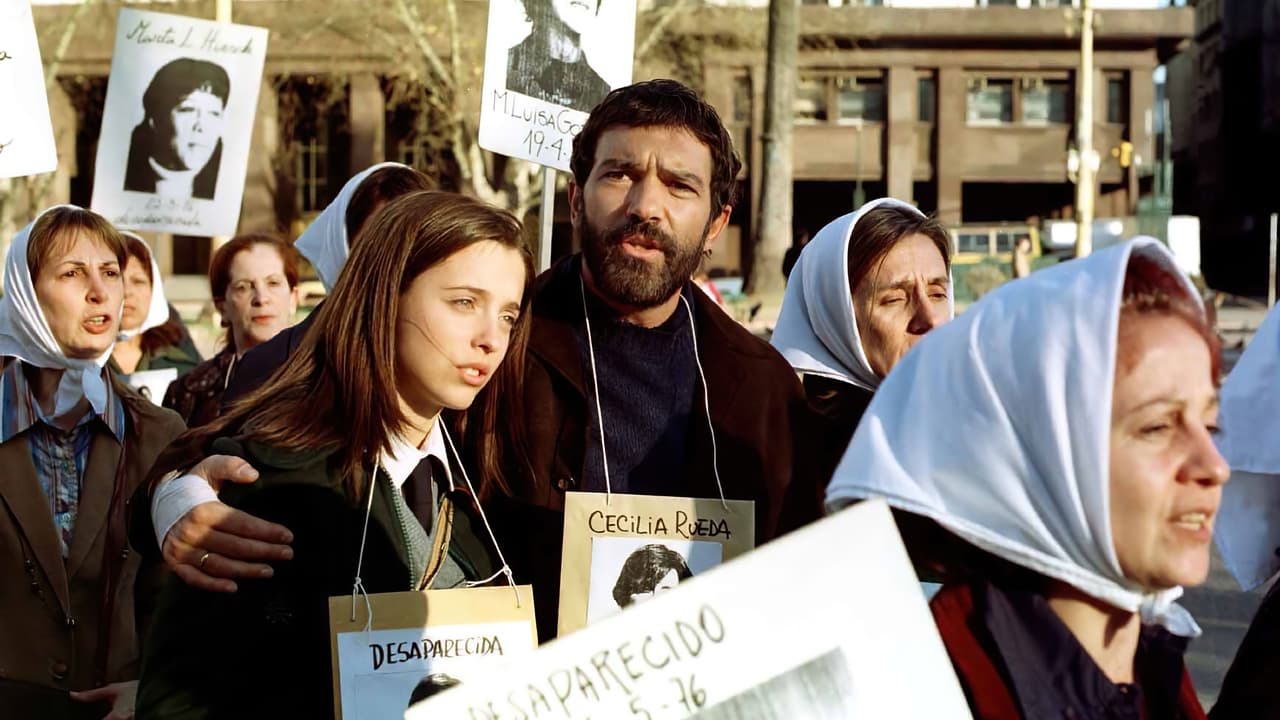
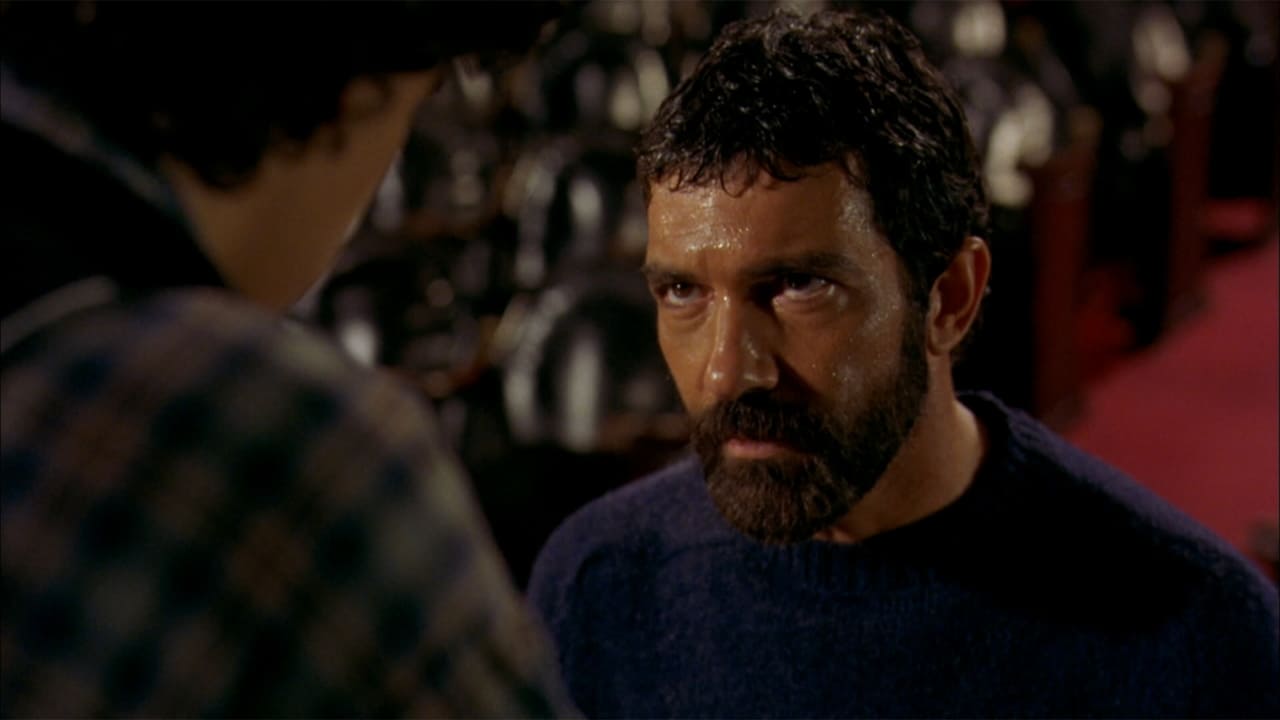
Imagining Argentina could only be imagined by a perversely ignorant mind. Since its director/screenwriter is Christopher Hampton, who before and after has adapted the screenplays of Dangerous Liaisons, Mary Reilly, The Quiet American, and The Father, I can only blame Lawrence Thornton, whose novel inspired (though perhaps a better word would be instigated) this vile piece of crap. The film takes place in 1977, in an Argentina where everyone speaks English with a wide range of Hispanic and Latin American accents, none of which sound remotely Argentinian. The exception is Emma Thompson, who uses her natural British accent even though her character's name is Cecilia Rueda. She is a dissident journalist in Buenos Aires; after publishing an article denouncing the forced disappearance of students protesting bus fares, Cecilia is kidnapped by the secret police. Faced with the indifference, and almost certain complicity, of the authorities, her husband Carlos (Antonio Banderas) puts up posters with Cecilia's photo, but I doubt that these are of any use, considering that the information on them is printed in Spanish and here everyone, as I just noted, speaks English. This linguistic dissonance, however, is not the most outrageous aspect the movie. Oh no; that dubious honor is reserved for the fact, and I swear I'm not making this up, that Carlos happens to be psychic. Really. Carlos is producing a play for a youth theater troupe, and one fine day, completely out of the blue, he tells one of the actors that his father, who was also kidnapped, will be released later that night. “It was as if I was remembering the future,” he explains to his friend and colleague Silvio (Rubén Blades, who that same year appeared in Once Upon a Time in Mexico; who would have imagined that the latter would be the more realistic of the two). The whole thing is like a cross between Tell Me How I Die and the Saturday Night Live episode where Chris Walken is a "trivial psychic," except that there’s nothing trivial about state terrorism in Argentina in the 1970s and 1980s. Carlos's prediction comes true, which could very well have been a coincidence; however, he never questions his new powers and soon summons the Mothers of Plaza de Mayo to reveal the fate of their loved ones. All of this is extremely insensitive, offensive, and disrespectful. Not only does it minimize an enormous tragedy, but on top of that, whether deliberately or not, effectively calls it into question. Let's say that Johnny Moviegoer does not know the full extent of the atrocities committed during the last dictatorship in Argentina, but he is fully aware that in real life no one can "remember the future"; now, if the movie indiscriminately exaggerates the latter, who could blame Johnny for assuming that the former is likewise pure hyperbole? As it is, the graphic scenes of rape and torture presented in the film are gratuitous because they do not take place in a medium that bears any resemblance to the real world. Films like Night of the Pencils and The Official Story are vastly superior not only because they were written in Spanish and directed and acted by Argentines, but above all because they take their material very seriously. Imagining Argentina is, and this is the lesser of its evils, unnecessary, but since they felt compelled to do it, why not change Carlos from a real psychic to a charlatan who slowly changes his attitude as he becomes more familiar with the stories of the people he’s scamming? That way it wouldn’t be the filmmakers the ones who end up coming across as swindlers.
คะแนน
5.7
Votes
55
Popularity
4
Photos
Stills & key art from the movie
















Your free movie & series tracker
What is Moventra?
Moventra keeps your films and series in one place. Save what you want to watch, tick off episodes as you go, and always know what to watch next.
Watchlist
Save movies and series you want to watch later.
Episode tracking
Keep tabs on every season and episode as you watch.
Recommendations
Find similar titles when something isn’t for you.
Import & export
Bring your list with you and keep control of your data.
Frequently asked questions
Where can I track Imagining Argentina?
Can I save Imagining Argentina to my watchlist?
Can I find movies similar to Imagining Argentina?
Is Moventra free?
One place for every film and series you love, starting with Imagining Argentina.
Free forever, no advertisement. Pick up where you left off and always know what’s next.