




Luce
Raak nooit meer kwijt wat je aan het kijken bent.
Al je films en series op één plek. Ga verder waar je gebleven was en weet altijd wat je hierna kunt kijken.





1,559 kijkers houden dit bij op Moventra ·gratis om mee te doen
- Regisseur
- Julius Onah
- Schrijvers
- Julius Onah, J.C. Lee
- Sterren
- Kelvin Harrison Jr., Naomi Watts, Octavia Spencer
- Genre
- Drama, Thriller
Verhaal
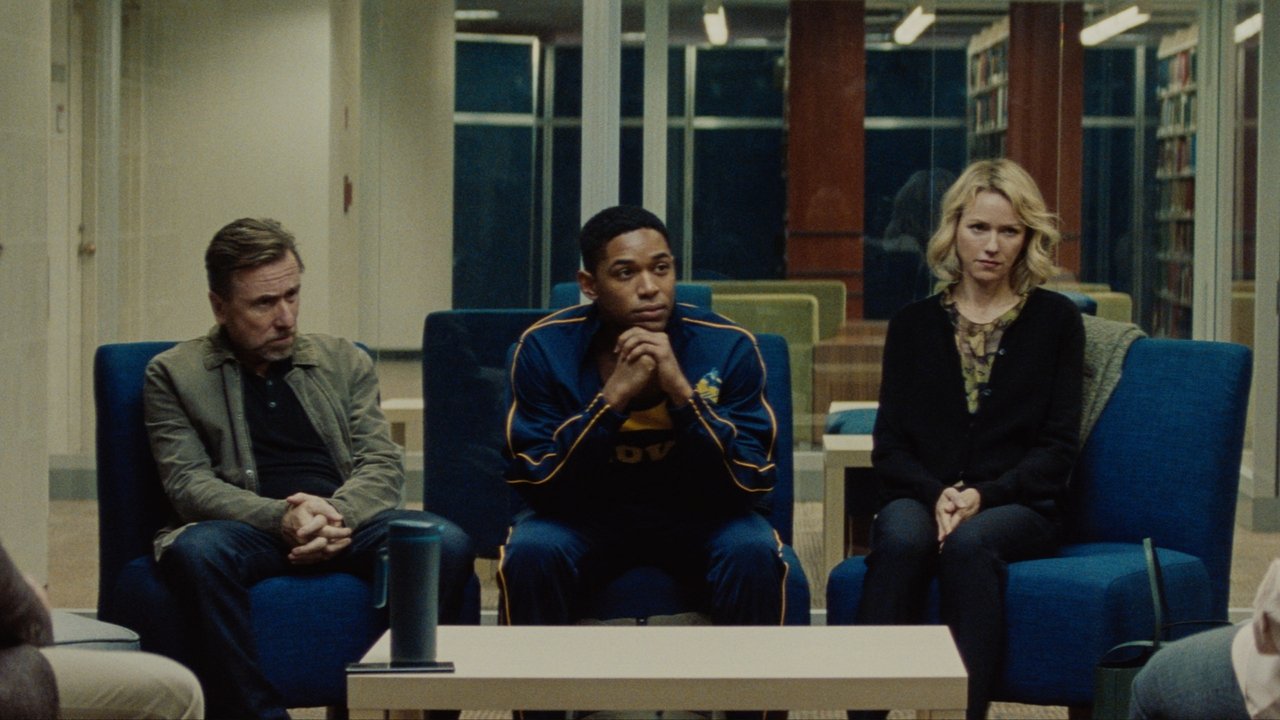
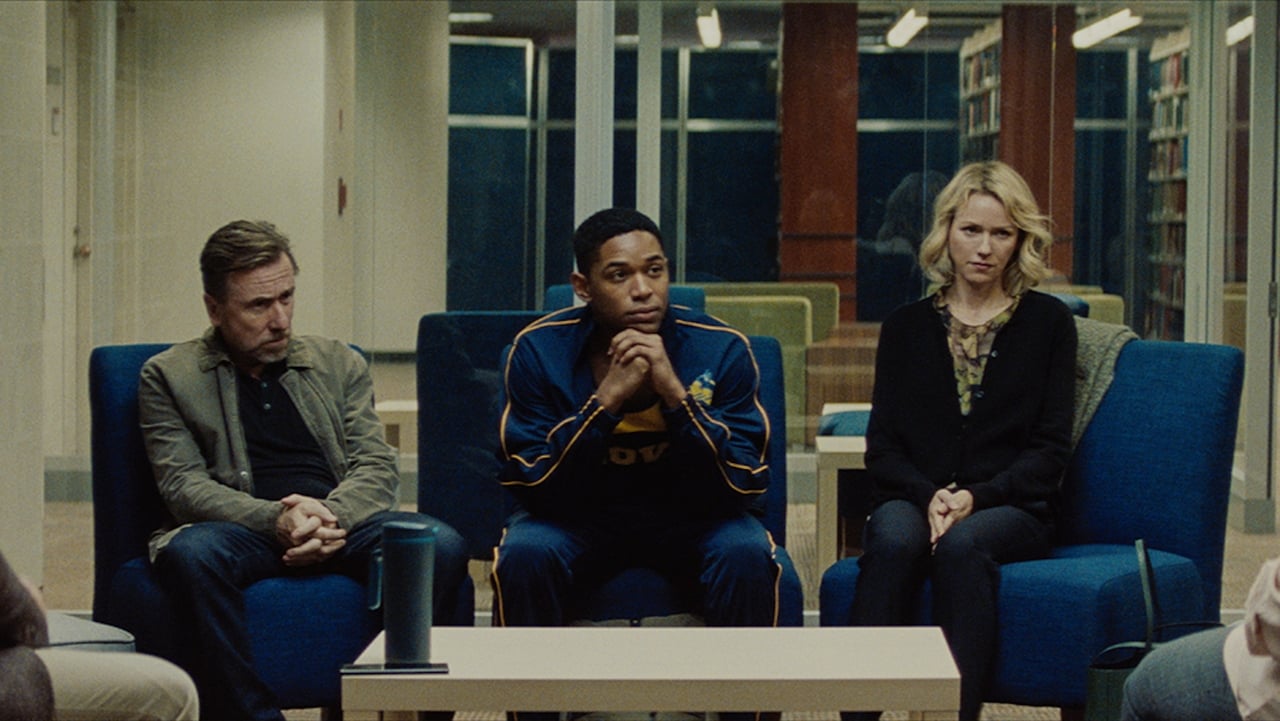
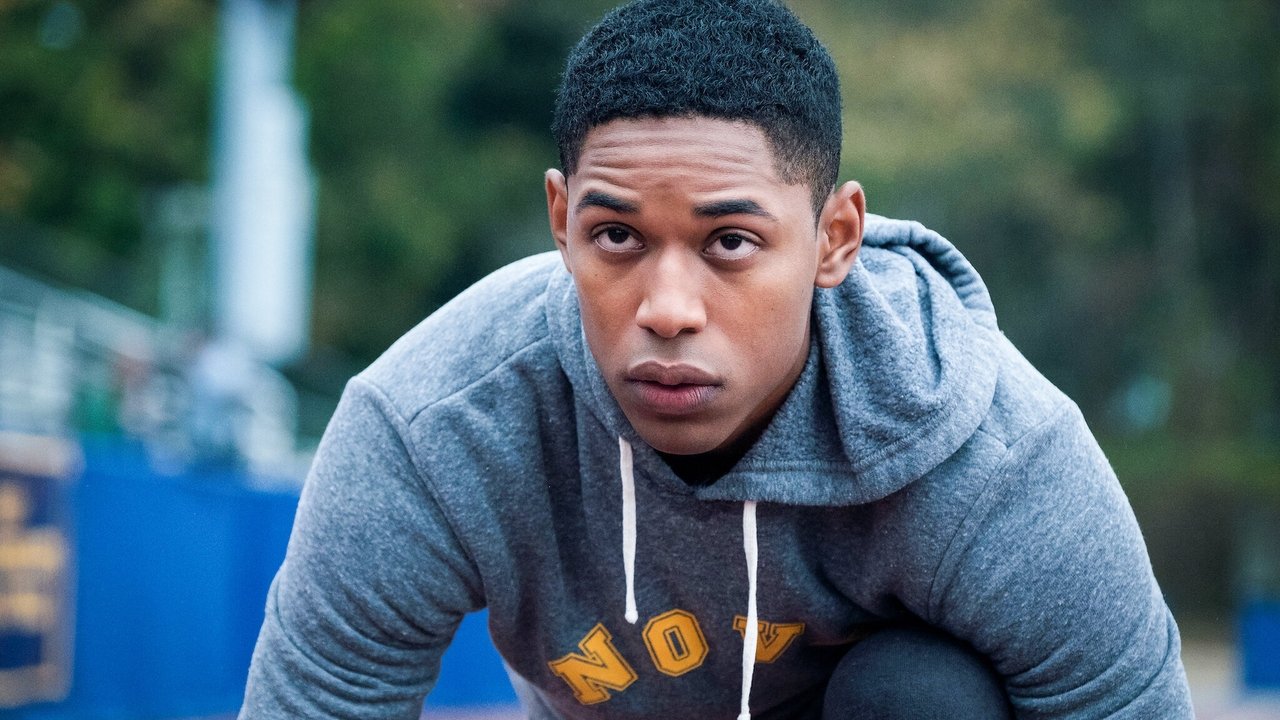
Luce is een zelfzekere student en erg geliefd door zijn ouders die hem op jonge leeftijd adopteerden. Hij sleept desalniettemin een trauma mee vanuit zijn jonge verleden in een door oorlog verscheurd Afrika.
- Tagline
- The truth has many faces.
- Genre
- Drama, Thriller
- Studio's
- Dream Factory Group, Altona Filmhaus, New Tropics, Topic Studios
- Uitgebracht
- 2019
- Talen
- Engels
- Landen
- United States of America· China
Op het web
Trefwoorden
Kelvin Harrison Jr.
Luce Edgar
Naomi Watts
Amy Edgar
Octavia Spencer
Harriet Wilson
Tim Roth
Peter Edgar
Norbert Leo Butz
Dan Towson

Andrea Bang
Stephanie Kim

Marsha Stephanie Blake
Rosemary Wilson

Omar Brunson
Corey Johnson

Noah Gaynor
Kenny Orlicki

Stro
DeShaun Meeks

Christopher Mann
Coach Reeves

Hannah Cabell
Lena Tennyson

Colton Osorio
Little Boy
Gibson Frazier
Man
Ian Unterman
Other Man

Meredith Holzman
Woman

Liza J. Bennett
Karen

Samantha Posey
Beth

Souléymane Sy Savané
West African Man

Mfoniso Udofia
West African Woman
Reviews
4 recensies
Kelvin Harrison Jnr treads the line between perfect student and perfect demon with some aplomb in this film. Naomi Watts and Tim Roth also provide a credible set of parents facing problems with both their (adopted) son and with their own relationship. Octavia Spencer stands out too - but I have to say, I don't find there to be much cohesion here. Certainly, the threads address issues of racial and gender stereotyping, but they don't intertwine in any particularly convincing way. I had to make quite a number of assumptions to make any sense of the ending - perhaps that was the plan - but it left me feeling a little dissatisfied, even frustrated. Maybe there is to be a "Luce (ends) 2"?

**_A slightly repetitive, but nonetheless fascinating societal drama that rewards concentration_** >_One of my key concerns with_ Luce_, and intertwined with exploring identity, is exploring power – who has it, who doesn't, and how our institutions uphold the rigid systems of power that disadvantage certain demographics. So much of the dialogue in our culture right now is about confronting systems of power that disenfranchise women, the LGBTQIA community, people of colour, people with disabilities, and a myriad of other marginalised groups. Luce explores how life can be experienced by those_ _on the receiving end of exploitative and unfair power dynamics._ - Julius Onah; Press Notes Trump's America, such as it is, is a place where the intolerance, xenophobia, and hatred that once existed in the shadows, now proudly parades around in daylight, a red baseball cap on its head, an American flag draped around its shoulders. As a result, issues such as race, gender, and class have become more incendiary topics than they've been in years. It's a house divided against itself, and it's the setting for _Luce_, a film which examines a myriad of these issues. Adapted from the play of the same name by J.C. Lee, _Luce_ was written for the screen by Lee and Julius Onah, and directed by Onah. Tackling all manner of hot-button issues, including race, class, gender, power, privilege, #MeToo, academic achievement, stereotypes, liberal elitism, even revolutionary rhetoric and the importance of language in encoding societal/political power structures, it also works as a thriller about a young man who may, or may not, be a dangerous sociopath posing as the embodiment of the American Dream. Without question it asks a lot of the audience, not just in terms of meeting it halfway in an ideological sense, but also in more fundamental narrative terms – the film's core is a puzzle that can only be fully resolved by reading between the lines. And there are a hell of a lot of lines, meaning some audiences simply won't want to put in the effort. It's by no means perfect – it's too long and lapses into repetition on occasion, and it spread itself too thin thematically – but, by and large, this is strong work, brilliantly acted, subtly directed, and with plenty to say to those willing to listen. In Arlington, VA, 17-year-old Luce Edgar (Kelvin Harrison, Jr.) is the adopted son of Peter (Tim Roth) and Amy (Naomi Watts), a middle-class liberal couple. Born in Eritrea, Luce spent the first seven years of his life as a child soldier. However, with the love of his adopted parents and a lot of therapy, he has grown into an exceptional young man; all-star athlete, captain of the debating team, all-round honour student, celebrated by his school as destined for greatness. However, when his history teacher Harriet Wilson (Octavia Spencer), who has a reputation for being harder on black students and in whose class Luce's grades are lower than in his others, gives an assignment to write from the perspective of a revolutionary, Luce chooses Frantz Fanon, the Pan-Africanist writer who argued in his 1961 book _Les Damnés de la Terre_ that colonialism could only be defeated by violence. Disturbed by Luce's apparent endorsement of Fanon's theories, Wilson searches his locker without his permission (something she has also done to other students), finding powerful fireworks, and so sets out to convince the Edgars that their son may be dangerous. However, when Luce learns what Wilson is doing, he embarks on his own course of action. In a film which takes in countless themes, one of the most prevalent is race, especially the notion of differences in black identity – both Wilson and Luce are black, but Luce is also an immigrant with a vastly different frame of socio-political reference. Sure, he has experienced great hardships, but since arriving in the US, he's been relatively sheltered (to quote Onah, "_Luce's proximity to whiteness affords him certain privileges that other black characters don't enjoy_", and when Wilson asks him if anyone has ever called him the n-word, he admits they have not). Wilson, for her part, is a child of the 60s, with direct experience of the Civil Rights Movement and the racism that made it necessary. However, perhaps because of this, she subscribes to the theories of respectability politics, seeing all black people as brethren and sharing a common bond. This is one of the things against which Luce pushes back most strongly – he disagrees that there's such a thing as a monolithic black identity, insisting he's more than a symbol for minorities and refusing to conform to Wilson's conception of what a successful black student should be. He argues that if the point of the Civil Rights Movement was to give people the freedom to be whomever they want, then he too should be afforded that same freedom. To conform to preconceived and idealised notions would be to define himself on other peoples' terms, in a manner not entirely dissimilar from the very inequalities against which the Civil Rights Movement was a reaction. And, of course, it's important not to forget that amidst all the ideological differences between Luce and Wilson, their initial conflict is a more tangible one – after writing a paper about violence, he's profiled in a way that a white student would not be. The fact that Wilson herself is black is irrelevant to this – she reads what he says about violence and she assumes he shares Fanon's sentiments, and hence could very well be dangerous, although he maintains he did only what the assignment called for – to write from the perspective of a revolutionary. In this way, the film deconstructs the concept of the "model immigrant" – the immigrant who must prove their harmlessness and demonstrate their potential to contribute before they can be accepted by society at large. But is such a requirement of assimilation just another form of racial profiling? This is one of the (many) fascinating and well-articulated thematic questions left relatively unanswered. One of the things the film does especially well is toy with audience expectations. Wilson, like much of society, seems to think of Luce in binary terms – he's either a bastion of what's possible in the land of dreams or he's violent and dangerous. Cinema audiences too are conditioned to think in such binaries – we want ambiguous characters such as Luce to ultimately be revealed as one thing or the other, and that Onah resists this is built into the film's very DNA. He knows that people will scan the text to find clues to confirm this notion or that notion, and he delights in complicating that process at every turn – when a grinning Luce mentions fireworks to Wilson, is he threatening her or is it an innocent reference to the Fourth of July; when an amiable Luce meets Wilson and her drug-addict sister Rosemary (a stunning performance by Marsha Stephanie Blake) in a supermarket, is it a coincidence or did he follow them? In short, is Luce the sociopath that Wilson thinks he is or is he the perfect student and son whom everyone else believes him to be? That both are possible for almost the entire runtime is a testament to the writing, directing, and acting. Indeed, I'd be remiss if I didn't talk a little about that acting, which is universally exceptional. Harrison vacillates (often within a single scene) between playing Luce as a manipulator who uses every tool available to him to subtly attack others and an honourable and gifted young man determined to make his parents proud. And just when you think you've got him figured out, a sly glance, a slight smile, a shift in body language will completely dismantle your theory. In a part that's very, very wordy, some of Harrison's best acting concerns Luce's subtle non-verbal traits, in what is a remarkably nuanced and ambivalent performance. Spencer is equally good in the role of Wilson, whom she plays as far more on the surface than Harrison's Luce. However, so too does she exhibit a degree of ambivalence – we're often not sure if she's acting out of genuine concern for the school or is instead being vindictive towards a student whose thinking she has been unable to bend to her own. In terms of problems, the audience has to do a lot of the leg work, and it's something which will be immediately distasteful to some, especially those who demand rigid binaries and clear explanations from their narratives. Personally, I loved the inherent ambiguity, but I understand that some won't. The same is true of many of the themes, which tend to be raised in something of a phenomenological vacuum, exiting almost as hypotheticals rather than prescribed answers to the issues addressed, and again asking the audience to connect some of the dots. More of a problem for me was that the film ran a good 20 minutes longer than necessary, with much of the dramatic tension slackening in the last act, when it should be at its most taut. It's also prone to repetition – seen most clearly in Peter and Amy's constant back and forths and the tense dialogue scenes between Luce and Wilson, several of which run a beat or two too long. The film also features a few too many issues, several of which are introduced and taken virtually nowhere. A subplot involving a possible sexual assault at a party, for example, pays lip-service to many of the tenets of #MeToo but does very little beyond that. Nevertheless, I was impressed with _Luce_. What it says about the US's (in)ability to engage in meaningful dialogue regarding important socio-political topics isn't flattering, but it is compelling. Essentially a film about pressure, as exerted by parents, by schools, by teachers, by friends, by society, by oneself, it's at least partly an exposé on the bitter divisions inherent in Trump's America, taking in race, gender, history, truth, #MeToo, respectability politics, expectation, language, power, even some thriller beats. It does spread itself a little thin and the ambiguity won't be to everyone's taste, but this is brave filmmaking with a lot on its mind.

Tense and keeps you guessing, but somehow the stakes never seem so high as to justify the level of intensity. Great performances, great dialogue, and thought provoking racial commentary make it worth seeing though.

NunzioGiannatelli
11 jan. 2026 · via TMDb
Defying simple categorization, the film unfolds with the menace of a horror movie while remaining a character-driven drama. This slow-burn thriller relies on explosive dialogue and ambiguous expressions rather than action, keeping the audience uneasy and guessing until the final frame. Parents be well advised that this movie contains nudity involving a scene in which Marsha Stephanie Blake's hairy vagina is shown at length when she strips nude in public.
Beoordeling
6.4
Votes
333
Popularity
2
Foto's
Stills en key art van de film




Jouw gratis film- & serietracker
Wat is Moventra?
Moventra onthoudt wat je kijkt, zodat jij dat niet hoeft. Houd een watchlist bij, log afleveringen en ontdek vergelijkbare titels — gratis.
Watchlist
Bewaar films en series die je later wilt kijken.
Afleveringen volgen
Houd elk seizoen en elke aflevering bij terwijl je kijkt.
Aanbevelingen
Vind vergelijkbare titels als iets niets voor je is.
Im- & export
Neem je lijst mee en houd zelf de controle over je gegevens.
Veelgestelde vragen
Hoe voeg ik Luce toe aan mijn bibliotheek?
Kan ik Luce beoordelen en recenseren?
Waar vind ik meer films zoals Luce?
Zijn mijn Moventra-gegevens privé?
Je watchlist, je voortgang, je Luce. Allemaal in één gratis app.
Voor altijd gratis, geen reclame. Ga verder waar je gebleven was en weet altijd wat er hierna komt.